My insights and writing into Artificial Intelligence and Search


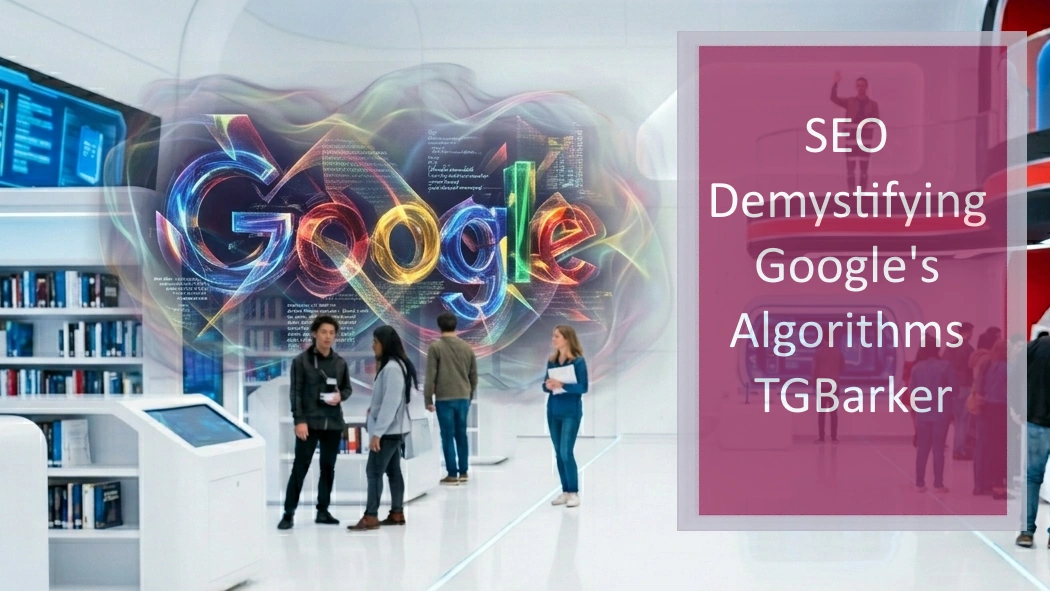
Google logo demystifying in a futuristic-library.webp
These articles explore how modern search systems, including how Google, evaluate websites as structured entities rather than collections of pages. They examine why visibility often stalls despite ongoing SEO activity, how interpretation stabilises over time, and what actually needs to change to shift that position.

Understanding How Structure Shapes Search Visibility

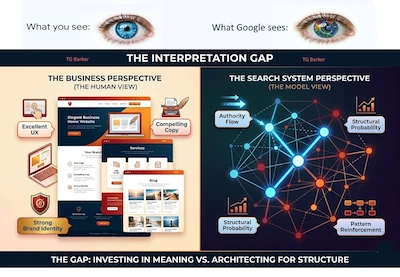
At the centre of this is not optimisation, but structure — how authority is distributed, where it accumulates, where it dissipates, and how intent is reinforced across a site through structural authority flow. These are the underlying dynamics that shape visibility long before rankings appear or decline.

The purpose of this work is not to provide tactical advice, but to support clearer decision-making. Because without understanding the hidden model behind your website’s rankings, further investment often compounds the same outcomes rather than changing them. The future of SEO is still alive and well and even more exciting since the inception of AI.

Foundational & Systems-Level Analysis;

Why Is My Website Not Ranking?Why Is My Website Not Ranking?
Many website owners reach a point where they ask a simple question: why is my website not ranking?
why your website is not moving or ranking on GoogleWhy Your Website Isn’t Moving Up Google — Even After Months of SEO
You have invested in content. Technical issues have been fixed. Pages are optimised. Backlinks have been acquired.
Why has my website dropped?Why Your Website Rankings Suddenly Dropped?
When website rankings drop, the instinct is immediate reaction. Traffic declines. Leads slow. Internal questions begin.
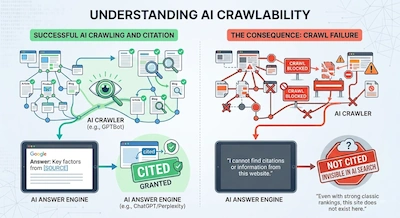
Web crawlers
80% of Website Traffic is No Longer Human
– An examination of the hidden machine layer of the internet and how automated systems now dominate website traffic.

Reshaping UK SEOHow AI Search Is Reshaping UK SEO

A new class of search experiences—driven by large language models and graph-based understanding—has arrived in Britain.

LLMS does not mean Large Lady ModelsHow to Appear in AI Models (LLMs) Like Gemini and Copilot
For most of the past twenty years, search visibility meant position. You ranked. You moved up.

How to engineer your website for LLM visibilityHow to Engineer Your Website for LLM Visibility

For most of the past twenty years, search visibility meant position. You ranked. You moved up. You competed for page one.

How Google Ranks Search Results A Structural Explanation expert perspective on how Google ranks search resultsHow Google Ranks Search Results
A Structural Explanation expert perspective on how Google ranks search results — and why most SEO fails to influence those rankings Search rankings are not assigned in the way most people assume.
Visual representation of the ReviewThe Hidden Model Behind Your Website’s Rankings
Search systems do not just rank pages. They construct models — and rankings are the visible outcome of that model.
Visualization of Search Systems Evaluation showing website authority flow and internal link patterns in blue and red.
Search Systems Evaluation: Is Your Website Structurally Invisible?
Search systems do not evaluate websites in the way most businesses assume. They do not simply read content, count keywords, or reward activity.
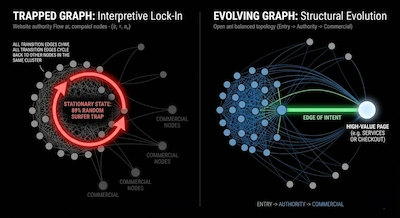
Graph theory diagram comparing two website structures: A 'Trapped Graph' with a red feedback loop showing 89% interpretive lock-in of authority, versus an 'Evolving Graph' where a thick green edge redirects authority to high-value pages like services and checkout.
The Anatomy of a Website Ranking Plateau

Visualizing Interpretive Lock-In: The Anatomy of a Ranking Plateau. This diagram is a visualization of a website’s internal architecture, viewed through the lens of Directed Graph Theory.

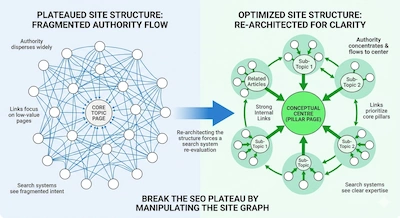
A comparison infographic titled 'Break the SEO Plateau by Manipulating the Site Graph.' The left side shows a 'Plateaued Site Structure' with a chaotic, tangled web of nodes where authority disperses widely and intent is fragmented. An arrow labeled 'Re-architecting the structure forces a search system re-evaluation' points to the right side, which shows an 'Optimized Site Structure.' This model features a clear 'Conceptual Centre' (Pillar Page) surrounded by organized sub-topic clusters and related articles, with green arrows illustrating how internal link equity concentrates and flows toward the center to signal expertise to search systems.
The Architecture of Perception: How Google Evaluates Your Website as a System

In the world of high-stakes SEO, there is a fundamental misunderstanding that visibility is a reward for volume—more content, more technical fixes, and more backlinks.

A minimalist digital visualization of scattered blue data points flowing through golden pathways into a central glowing hub, representing how search systems interpret website signals as probabilistic patterns.Websites as Probabilistic Patterns

Search systems do not evaluate websites in the way humans do. They do not “read” pages, form opinions, or make subjective judgements about quality. Instead, they observe patterns — and over time, those patterns become the basis of how Google evaluates websites.

image using the metaphor: Your website is like a city. Adding more houses (content) doesn't help if the roads (links) all lead away from the business district. To grow, you don't need more houses; you need a new highway system.Why Successful Websites Stop Growing
Your website is like a city. Adding more houses (content) doesn’t help if the roads (links) all lead away from the business district. To grow, you don’t need more houses; you need a new highway system.
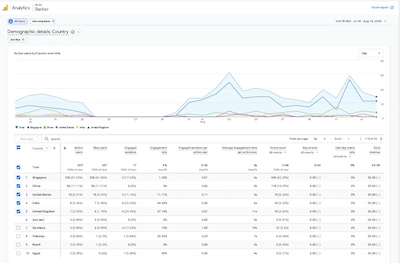
Travel holiday tours analyticsTravel & Tourism Website Analytics Case Study
Instead of a single algorithm, Google uses a layered architecture of machine learning systems, each responsible for understanding different aspects of a query or page. Some models focus on language comprehension, others on link trust, others on user behaviour.
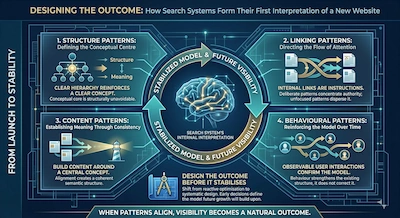
An infographic titled "Designing the Outcome: How Search Systems Form Their First Interpretation of a New Website," illustrating a cyclical system of SEO patterns."Launching a New Website
Search systems do not evaluate websites in the way humans do. They do not “read” pages, form opinions, or make subjective judgements about quality. Instead, they observe patterns — and over time, those patterns become the basis of how Google evaluates websites.
Signals stable authorityHow Search Systems Decide What to Trust
In the modern search landscape, authoritative content is not defined by the quality of a single article, nor by how well it is written in isolation.
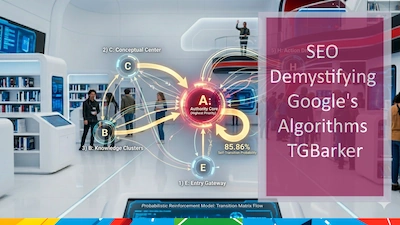
technical overlay of a Markov Chain Transition Matrix showing probabilistic pathways converging on a central Authority Core with a 85.86% self-transition probability.Understanding Website behaviour Through a Transition Matrix
How Internal Models Shape Search Interpretation: Most website owners think in terms of pages, rankings, keywords, and backlinks. Search systems do not.
A technical diagram illustrating structural resistance in search systems, showing new content and optimization signals being absorbed or deflected by a stable internal model and a fixed authority coreHow Search Systems Evaluate Websites
Over many years of working with websites, search engines, and long-term ranking behaviour, one observation became increasingly difficult to ignore. Many websites do not struggle because of poor effort, weak content, or a lack of optimisation.
A technical diagram of a search system's internal model, showing how new content and optimization signals are deflected by a pre-existing stable interpretation flow and structural resistance The Hidden System Behind Search Engine Visibility
Why more SEO activity stops working. For years, website owners have been told that growth is simply a matter of doing more. Publish more content. Build more backlinks. Add more keywords. Increase activity and rankings will eventually follow. Sometimes this works, particularly for newer websites that are still being explored and interpreted by search systems.
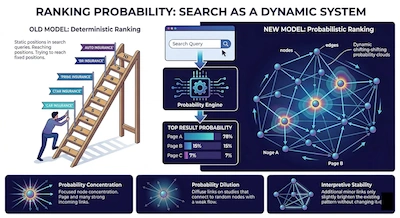
An infographic titled "Ranking Probability: Search as a Dynamic System" comparing the old deterministic SEO model of a linear ladder to a new probabilistic model. The new model illustrates search results as a complex web of nodes and edges, showing "Top Result Probability" percentages and explaining concepts like Probability Concentration, Dilution, and Interpretive Stability.Ranking Probability: Why Search Visibility Is a Probabilistic System, Not a Fixed Position
Search rankings are often discussed as though they are fixed positions waiting to be achieved. Businesses are told to improve keywords, publish more content, gain more backlinks, and eventually “reach number one.”
How SEO Is Changing After the Launch of AI ModelsHow SEO Is Changing After the Launch of AI Models
In mid-2025, the UK SEO landscape crossed a critical threshold.
Why Anchor Text Matters for Website OwnersWhy Anchor Text Matters for Website Owners
Why You Still Need Anchor Text Even If Your Website Has a Main Menu
Why Anchor Text Matters for Website Owners Strategies that worked yesterday become obsolete tomorrow,
Thanks to the whims of Google AI, shifting user behavior, and increasingly sophisticated search algorithms.
Mathematical models Aligning Your Website with Google’s Mathematical DNATurning Business Maths into Search Engine Momentum
When it comes to ranking in London’s fiercely competitive search environment, SEO can’t just be about keywords and backlinks anymore.
Business maths in marketingBusiness Mathematics in Marketing
AI is transforming business marketing mathematics by automating complex calculations, analyzing large datasets, and providing real-time insights to drive more effective decision-making.
why UX matters for any website ownerWhy UX Matters for AI & Every Website Owner
The Rise of Context-Aware AI in UX — and Why Every Website Owner Should Pay Attention
A sleek, stylized digital wireframe or blueprint of a complex structure (like a modern building or an intricate maze) overlaid with faint glowing code or mathematical data streams. The focus is on the "skeleton" of the structure rather than the surface.How Search Engines Decode Your Site
Behind every site is a conceptual map built from links, language, and structure. It’s the model that determines what you’re known for — and whether you’re surfaced or sidelined.

A complex, glowing digital network graph on a dark background illustrating website probability and movement structures. The diagram features interconnected blue and gold nodes labeled as "Authority Hub," "Conceptual Centre," "Knowledge Base," "Entry Page," and "Supporting Content." Glowing directional arrows represent transition pathways with mathematical formulas like "P(i → j)" and labels such as "Markov Chain Transition" and "Reinforcement Loop," visually demonstrating how search engine algorithms analyze website architecture and user behaviorSearch Engines and The Origins of Probability Modelling
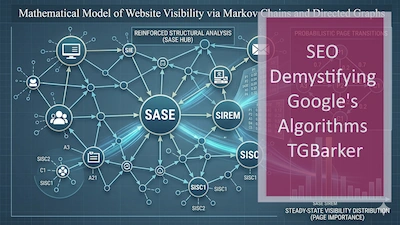
For many years, websites were commonly understood as collections of pages connected together through navigation menus and hyperlinks. Search engine optimisation emerged around this idea, focusing heavily on individual pages, keywords, and backlinks.

An infographic illustrating the invisible probability model behind search rankings. The top layer shows traditional SEO signals like keywords, backlinks, and content quality. The bottom layer reveals a hidden network graph of interconnected page nodes with flowing authority paths, accompanied by visualizations of a coin toss, an 8-sided die, and a Markov transition matrix.The Invisible Probability Model Behind Search Rankings

The hidden mechanics of search visibility. Traditional page-level SEO signals (top) merely feed into a more complex, underlying graph model (bottom) where search engines calculate authority flow and stable transition probabilities between pages.
Graph of user navigation for a website
SEO Page Rank Case Study using Markov Modelling Explaining the mathematical SEO framework of how PageRank flows in SEO.
Supercharge a website SEO using AI
How to Supercharge a website SEO using AI Using Markov chains in SEO allows analysts to model how authority flows through a website.
SEO Case Studies
Why SEO Services Often Fail — and Why Strategy Comes First The Strategic Search Authority Review is a diagnostic framework designed to reveal how modern search and AI systems currently interpret a website as a whole.
Importance of Technical SEO
Understanding the Importance of Technical SEO By improving the website’s ranking and visibility, the website is more likely to attract organic traffic.
Comparison how search systems evaluate websites
How Search Behaviour Varies by Industry: SEO Case Studies observations drawn from real websites across different industries.
Auditing a website
SEO Website Auditing Unlike checklist audits, we model your site as a Markov chain and run a PageRank-style eigenvector analysis to reveal which pages actually receive (or leak) authority.
Semantic SEO for London Businesses
Semantic SEO for London Businesses Today, Google no longer ranks pages primarily by matching keywords. It ranks by meaning.