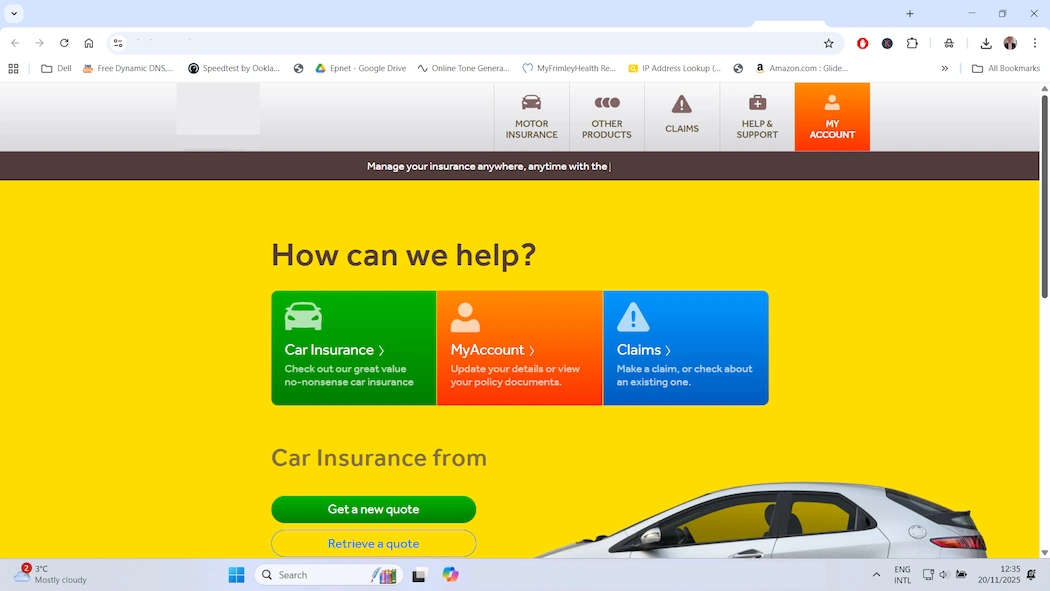
We conducted an Internal Link Audit on this website which appeared on the first page on Google. So although it had already been published by Google on page one there are some audit factors that could improve the strength of the website which could possibly ensure it’s position or even improve it as it was not the top of the first page.
What are Markov chains and PageRank
– and what do the numbers actually mean?”
1. A Very Plain-English Introduction
What is a Markov chain?
Imagine a visitor who never gets tired and clicks links at random all day long.
-
They look at the page they are on,
-
see all the links that leave that page,
-
pick one of them equally at random,
-
and off they go to the next page.
A Markov chain is just the maths that describes this “random surfer” game.
If the surfer plays long enough, we can work out how often they land on each page.
Pages that are linked to a lot (or are linked to by pages that are linked to a lot) get visited more often – so they end up with a higher percentage.
What is PageRank?
PageRank is Google’s famous version of the same idea.
The only extra twist is that, every so often, the surfer teleports to a completely random page instead of clicking a link.
This stops them getting stuck in dead ends and makes the maths behave nicely.
Because Google invented it, the name “PageRank” stuck, but underneath it is almost the same Markov-chain calculation.
So what did we do?
We took the real map of internal links inside this website (every menu, footer, in-article link, etc.) and let both models run until the numbers settled.
The result is a list of every page with its share of the “random surfer’s” time – in other words, how much internal link love each page receives.
2. What the Numbers Mean (No Jargon)
Think of the percentages like pie slices:
-
Homepage = 2.5 % of the pie
→ Out of every 100 random clicks, 2.5 land on the homepage.
-
Breakdown-cover page = 1.6 %
→ That page gets 1.6 random visits out of every 100.
-
A tiny blog post that nobody links to = 0.01 %
→ The surfer hardly ever sees it.
Bigger slice = more internal authority = better chance to rank.
3. Headline Findings for this car insurance website
-
Homepage has the biggest slice (2.5 %).
That is healthy – it shows the rest of the site is pointing “up” to the home page.
-
Help & Support and Claims are next (≈2 % each).
These hubs are well-connected, so Google can find and trust them easily.
-
Policy-upgrade pages (breakdown, hire-car, personal-injury) all sit around 1.5 %.
They are only two clicks from the homepage and are linked from almost every car-insurance page – good for selling add-ons and for SEO.
-
37 pages (mostly new guides) have virtually 0 %.
Nothing links to them, so the random surfer never finds them – and neither does Google.
-
A few boring pages (cookie policy, accessibility) are over-rewarded because every page links to them in the footer.
We can give that wasted juice to pages that earn money.
4. Picture Version
Imagine 10,000 marbles bouncing around the website all day:
| Where the marbles end up most |
Marbles out of 10,000 |
| Homepage |
250 |
| Help & Support |
200 |
| Claims |
190 |
| Breakdown-cover page |
160 |
| Hire-car page |
150 |
| Tiny orphan guide |
1 or 2 |
5. What We Recommend (Simple Actions)
-
Add a few links from popular pages to the 37 orphan guides – suddenly hundreds more marbles visit them every day.
-
Remove footer links to cookie-policy, etc. from every single page – those marbles roll somewhere useful instead.
-
Join up renewal FAQs to the upgrade pages – more marbles find the products that make money.
6. Bottom Line
-
The maths is just counting clicks.
-
The pie slices show which pages are easiest for Google to find and trust.
-
Bigger slices = better rankings = more quotes = more sales.
-
We have identified exactly which pages need more pie and where to steal the pastry from.
The internal linking analysis of this car insurance website shows that most of the site’s authority is currently being absorbed by Help & Support pages,
claims content,
and policy upgrade pages, while the core commercial insurance pages receive far less internal PageRank than they should. This misalignment weakens the site’s ability to rank for high-value car insurance keywords. By redirecting internal links from high-authority support and upgrade pages toward key commercial pages, reducing excessive support links in templates, strengthening navigation and breadcrumb hierarchies, and adding contextual links across the buying journey, the site can shift authority back to its most profitable sections. Implementing these improvements will significantly enhance the visibility and competitiveness of the car insurance website core insurance products in search results.
Finally Build a Dedicated “Car Insurance Hub” Page
This becomes the large authority node feeding ATPs.
The hub should link to:
Then, update internal links so other pages point to this hub, not directly to support pages.